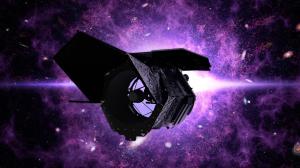
The James Webb Space Telescope continues to reshape our understanding of the early universe, delivering observations that challenge existing models of galaxy formation and force astronomers to reconsider fundamental assumptions about how the first cosmic structures emerged from the primordial darkness. Recent data releases have revealed galaxies that are larger, more luminous, and more chemically complex than theoretical models predicted for such early epochs, raising provocative questions about the physics of the first billion years after the Big Bang.
Unexpectedly Mature Galaxies
Among the most surprising findings from JWST observations is the discovery of galaxies at extremely high redshifts that appear far more massive and structurally organized than current models of galaxy formation allow. These galaxies, observed as they existed when the universe was less than 500 million years old, display features including disk-like structures, evidence of multiple stellar populations, and chemical enrichment patterns that were expected to develop only over much longer timescales.
The existence of these mature early galaxies poses a significant challenge to the standard Lambda-CDM cosmological model, which describes how structures in the universe grew from small initial density fluctuations through gravitational accretion over billions of years. If galaxies could assemble and evolve as rapidly as JWST observations suggest, some aspect of our understanding of early star formation, dark matter behavior, or both may require revision.
Star Formation in the Early Universe
JWST spectroscopic observations have provided detailed measurements of star formation rates in early galaxies, revealing that some produced stars at rates far exceeding those observed in comparable galaxies at later cosmic epochs. These elevated star formation rates, if sustained even briefly, could explain how massive galaxies accumulated their stellar content in what appears to be an impossibly short time.
The telescope infrared sensitivity has also allowed astronomers to detect signatures of heavy elements in very early galaxies, indicating that at least one generation of stars had already formed, evolved, and exploded as supernovae before the light we observe was emitted. This rapid chemical enrichment implies an even earlier onset of star formation than the galaxies themselves represent, pushing the timeline for the first stars back toward the theoretical limits set by cosmic reionization.
Supermassive Black Holes in the Infant Universe
Perhaps the most perplexing discoveries have involved supermassive black holes in very early galaxies. JWST has identified active galactic nuclei powered by black holes with masses of hundreds of millions of solar masses at redshifts corresponding to the first billion years of cosmic history. The standard model of black hole growth through accretion cannot account for such massive objects forming so quickly, suggesting that either the first black holes formed through mechanisms different from those operating today or that accretion rates in the early universe were far more efficient than previously assumed.
Several theoretical proposals have been advanced to explain these observations, including direct collapse models in which primordial gas clouds skip the stellar phase entirely and collapse directly into massive seed black holes, and super-Eddington accretion scenarios in which black holes grow faster than the theoretical limit that normally governs their feeding rate. Testing these competing hypotheses will require additional observations and more sophisticated simulations.
Implications for Cosmology
The cumulative impact of JWST discoveries on cosmological models remains a subject of active debate within the astronomical community. Some researchers argue that the observations are broadly consistent with existing frameworks once selection effects and measurement uncertainties are properly accounted for. Others contend that the data point toward genuinely new physics that will require significant theoretical revision. The resolution of this debate will depend on continued observations, improved statistical analysis, and the development of more detailed simulations of early galaxy formation that can be tested against the growing body of JWST data.