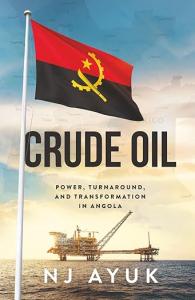
The upstream landscape of Angola is the subject of Crude Oil: Power, Turnaround and Transformation in Angola, which analyzes the reforms, projects, and investment commitments influencing the country's oil and gas sector.
Following over ten years of crude output decline, Angola's production has steadied around 1.1 million barrels per day, buoyed by offshore developments, exploration efforts, and a series of upstream policy changes.
NJ Ayuk, Executive Chairman of the African Energy Chamber, examines these events in Crude Oil: Power, Turnaround and Transformation in Angola. The publication details Angola's response to falling output via institutional reorganization, oil-and-gas policy adjustments, and fresh investment approaches.
Structural Reforms
Since 2018, a series of reforms aimed at boosting the investment climate and stimulating exploration and redevelopment of aging fields are described in the book.
Among these measures are the creation of the ANPG and the Instituto Regulador dos Derivados do Petróleo (IRDP), adoption of a multi-year licensing plan, rollout of Risk Service Contracts, and the restructuring of Sonangol.
Additional policies enacted by the government include the Incremental Production Decree, Gas Monetization Law, and Marginal Field Law. The National Development Plans published in 2018 and 2023 set out wider economic goals, which aimed to curb the production drop while fostering economic diversification.
Offshore Initiatives
A number of offshore projects that bolster Angola's production prospects are examined in the book, among them the TotalEnergies-operated Begonia and CLOV Phase 3 initiatives, which came online in 2025 with a total capacity of 60,000 barrels per day.
The Agogo Integrated West Hub, led by Azule Energy, is also highlighted, with the Agogo FPSO commissioned in 2025 and the Ndungu field starting up in 2026. The Kaminho development, operated by TotalEnergies, continues on track for first oil expected in 2028.
The book additionally surveys disclosed investment commitments throughout the industry. TotalEnergies has committed $3 billion to Angola in the near future, and Azule Energy has pledged $5 billion. ExxonMobil earlier signaled a possible investment of as much as $15 billion after exploration in the Namibe Basin, though initial drilling outcomes were deemed not commercially viable.
Onshore Efforts
Renewed exploration across Angola's onshore basins after the 2023 licensing round is also covered in the book. Activities comprise seismic surveys by Corcel at KON 16, planned drilling by Oando at KON 13, Sonangol-led exploration over KON 11, KON 12, and KON 15, and seismic campaigns by Etu Energias. Additional firms such as Walcot Energy and ACREP have also broadened their operations.
The book's conclusion is that ongoing policy reform, persistent exploration, and long-term investment strategies are increasingly defining Angola's upstream sector.
Readers can obtain Crude Oil: Power, Turnaround and Transformation in Angola in both paperback and digital editions from leading online sellers, such as Amazon.
Gradie
African Energy Chamber
send us an email