The sovereign wealth funds and private investment vehicles of the Persian Gulf states are reshaping the economic landscape of the Western world. From landmark real estate acquisitions in London and New York to controlling stakes in premier European football clubs, Gulf capital is flowing into Western markets at an unprecedented pace, raising questions about the shifting balance of global economic power.
In the first half of 2026 alone, Gulf-based investors committed an estimated 87 billion dollars to acquisitions and investments in North America and Europe, according to data compiled by the Sovereign Wealth Fund Institute. The figure represents a 22 percent increase over the same period last year and continues a trend that has accelerated markedly since the post-pandemic recovery.
The investment patterns reveal a deliberate strategy of diversification. Saudi Arabia’s Public Investment Fund, now managing assets exceeding 930 billion dollars, has expanded well beyond its early focus on technology ventures to encompass healthcare systems, logistics networks, and entertainment companies. The Abu Dhabi Investment Authority and Qatar Investment Authority have similarly broadened their portfolios, moving aggressively into renewable energy infrastructure and artificial intelligence ventures.
“What we are witnessing is the most significant reallocation of global capital since the rise of Asian sovereign wealth in the early 2000s,” said Professor Margaret Chen, director of the Center for International Finance at the London School of Economics. “The Gulf states are using their hydrocarbon revenues to purchase strategic positions in the industries that will define the next century.”
The sports sector has provided the most visible examples of this capital migration. Following Saudi Arabia’s acquisition of Newcastle United in 2021 and Qatar’s long-standing ownership of Paris Saint-Germain, Gulf investors have continued to acquire stakes in major sporting franchises across football, Formula One, golf, and professional boxing. These investments serve dual purposes: generating financial returns while projecting soft power on the global stage.
Technology has emerged as another priority sector. Gulf sovereign funds have become major participants in funding rounds for artificial intelligence companies, quantum computing startups, and semiconductor manufacturers. The Public Investment Fund’s 3.5 billion dollar investment in a European chip fabrication facility, announced in March, signaled a willingness to compete directly with Western governments in securing access to critical technologies.
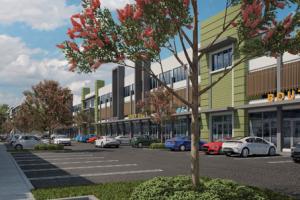
Real estate continues to absorb enormous sums. Gulf investors now hold significant commercial property portfolios in virtually every major Western financial center. In London, Qatari entities alone own landmarks including the Shard, Harrods, and substantial portions of the Canary Wharf financial district. Similar accumulations are underway in Manhattan, Paris, and increasingly in secondary cities across Europe and North America.
The trend has generated both enthusiasm and unease among Western policymakers. Proponents argue that Gulf investment creates jobs, funds infrastructure, and provides liquidity to capital markets that might otherwise struggle to finance large-scale projects. Critics raise concerns about strategic dependency, noting that concentrated foreign ownership of critical assets could create vulnerabilities during periods of geopolitical tension.
Several Western governments have responded by strengthening foreign investment screening mechanisms. The United States expanded the authority of the Committee on Foreign Investment, while the European Union implemented new regulations requiring closer scrutiny of sovereign wealth fund acquisitions in sensitive sectors. These measures have slowed but not stemmed the overall flow of Gulf capital.
For the Gulf states themselves, the investment surge reflects an existential calculation. With global energy transitions threatening to diminish the long-term value of hydrocarbon reserves, converting oil and gas wealth into diversified international portfolios represents a hedge against an uncertain future. The strategy draws explicitly on the model established by Norway’s Government Pension Fund, though it operates on a larger scale and with broader strategic ambitions.
The implications extend beyond economics. As Gulf capital becomes increasingly embedded in Western commercial infrastructure, the diplomatic relationships between these regions are being reshaped. Investment ties create mutual dependencies that complicate traditional alliance structures and introduce new variables into foreign policy calculations on both sides.
Whether this rebalancing of global economic power ultimately proves stabilizing or destabilizing remains an open question. What is clear is that the era of predominantly Western control over the commanding heights of the global economy is giving way to something more complex, more multipolar, and more reflective of where the world’s wealth is actually accumulating.