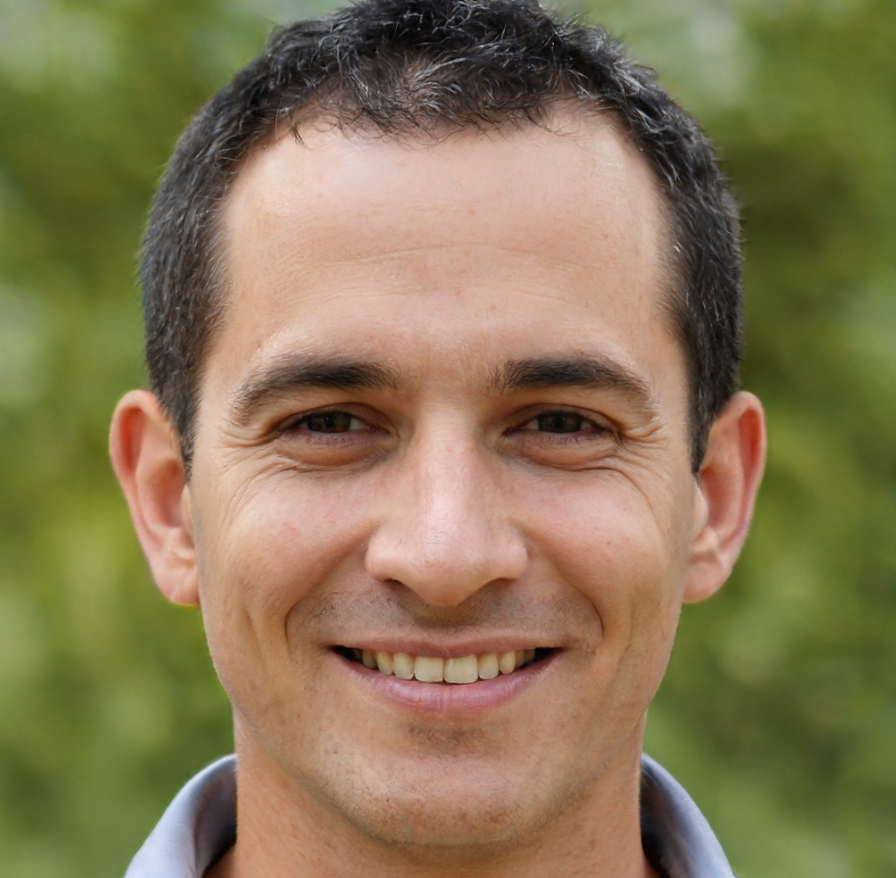
Wes Deadrick, Director of NASA's Katherine Johnson Independent Verification and Validation (IV&V) Facility

Dr. Scott Zemerick, TMC Technologies' Chief Engineer
NASA IV&V, TMC Technologies, and Academic Partners Reflect on a Decade of Impact Across Government, Industry, and Academia
"TMC has been part of the NOS3 story since day one. The original vision was bold: create a digital twin capable of supporting SmallSat development before hardware is available.”— Dr. Scott Zemerick, TMC Technologies Chief EngineerSALT LAKE CITY, UT, UNITED STATES, August 23, 2026 /EINPresswire.com/ — TMC Technologies is marking a significant achievement in the evolution of SmallSat, spacecraft software development, and digital engineering: the 10th anniversary of the NASA Operational Simulator for Space Systems (NOS3).
What started as a joint undertaking between NASA's Katherine Johnson Independent Verification and Validation (IV&V) Facility and TMC Technologies to build and launch Simulation-to-Flight 1 (STF-1), West Virginia's first spacecraft, has grown into a widely adopted open-source digital-twin environment that supports spacecraft development and testing throughout government, academia, and industry.
Since 2016, NOS3 has allowed spacecraft developers to design, test, verify, and operate complex flight software within a realistic, software-only environment long before physical hardware is accessible—transforming the way missions are developed while lowering cost, risk, and schedule impacts across the space sector.
The influence of NOS3 reaches well beyond a single mission or technology platform. What began as an inventive collaboration among NASA, TMC Technologies, and academia to support West Virginia's first spacecraft has helped define a new methodology for spacecraft software development and digital engineering.
“STF-1 and the development of NOS3 demonstrated what can happen when the government, industry, and academia come together around an interesting mission problem and are willing to approach it differently and innovatively,” said NASA IV&V Director Wes Deadrick. “Ten years later, the continued growth and adoption of NOS3 reinforces how important high-fidelity software-centric simulation environments have become to mission assurance and particularly giving teams the ability to understand software and system behavior earlier, understand risk sooner, and ultimately increase confidence before we ever get to flight.”
Today, NOS3 brings together flight software, spacecraft dynamics, ground systems, mission operations, and hardware simulators into a single open-source environment that supports development, verification, training, and mission operations. Over the past decade, the technology has expanded well beyond its SmallSat roots, supporting NASA projects and missions—including the Lunar Environment Monitoring Station (LEMS)—while enabling numerous government, academic, and commercial organizations to build digital twins customized to their own spacecraft.
"TMC has been part of the NOS3 story since day one," said Dr. Scott Zemerick, Chief Engineer at TMC Technologies. "The original vision was bold: create a digital twin capable of supporting SmallSat development before hardware is available. Working alongside NASA IV&V, our engineers and scientists helped turn that vision into reality. Ten years later, NOS3 continues to demonstrate how simulation-driven engineering can improve mission success while accelerating development timelines. We are incredibly proud of the role TMC has played in its creation, growth, and continued evolution."
For TMC Technologies, the anniversary represents far more than a software milestone. It reflects a decade of partnership, innovation, and leadership in advancing digital engineering capabilities for the aerospace community.
“NOS3 is a strong example of what can be accomplished through sustained collaboration between NASA IV&V and industry,” said Jeff Edgell, President and CEO of TMC Technologies. “For more than a decade, TMC has worked closely with NASA IV&V to develop and advance NOS3 in support of spacecraft software development, testing, and mission assurance. That partnership has helped grow NOS3 into a capability now used across government, academia, and industry.”
Building on the success of NOS3, TMC Technologies continues to push digital twin technology forward through its commercial space systems portfolio.
The company's Small Satellite Digital Twin (SSDT®) platform is the commercial evolution of NOS3, offering mission-specific customizations, proprietary enhancements, and advanced capabilities for government and commercial customers. TMC also provides hands-on space systems training using NOS3 and SSDT®, enabling engineers, operators, and mission teams to gain practical experience in realistic spacecraft development and mission operations environments.
"The significance of NOS3 goes well beyond the technology itself. It demonstrated a fundamentally different way to develop complex space systems, using high-fidelity digital environments to identify problems earlier and make better engineering decisions before hardware is fully available," said Denise Lindsey, Chief Strategist and Senior Vice President of TMC Technologies, who oversees the company's Federal Civilian Division. "Over the last decade, we've built on that foundation with SSDT® and FlexSat®, giving mission teams a continuum from software-based simulation through hardware-in-the-loop testing. As spacecraft become more complex and development timelines continue to compress, we believe that integrated digital engineering approach will become increasingly important to mission success.
Live Demonstration & More Information at 40th SmallSat Conference
TMC Technologies Chief Engineer Dr. Scott Zemerick will demonstrate NOS3 during his presentation at the 40th Annual Small Satellite Conference at the Salt Palace Convention Center, 100 South West Temple, Salt Lake City, Utah. The presentation will take place on Wednesday, August 26, at 3:25 p.m. MDT in Meeting Room 250 D/E, titled "Accelerate SmallSat Development with NASA Operational Simulator for Small Satellites (NOS3) and the TMC Technologies FlexSat®."
• Visit TMC Technologies Booth 2100 in the main exhibit hall of the Salt Palace Convention Center for a live demonstration of the NASA Operational Simulator for Space Systems (NOS3), its commercial version Small Satellite Digital Twin (SSDT®), and FlexSat®.
• Speak directly with TMC engineers and program staff to learn how these technologies can revolutionize your mission development process.
John Dahlia
TMC Technologies
+1 304-276-3161
email us here
Visit us on social media:
LinkedIn
Instagram
Facebook
YouTube
X
TMC Technologies – #RightPeople #RightSolutions #RightTime