For families navigating the rare and devastating realities of Rett syndrome, new treatment options cannot come soon enough. This week, a California biopharmaceutical firm presented data suggesting its experimental oral therapy could be a meaningful step forward in addressing the condition’s core symptoms.
Rett patients

Biomed Industries, Inc. Presents Positive Phase 2/3 Results of NA-921 for Rett Syndrome at World Pediatrics Conference, supporting further Phase 3 development
NA-921’s efficacy and tolerability findings support our vision of developing a meaningful treatment option for girls and women with Rett syndrome, offering renewed hope to patients and their families.”— Dr. Lloyd L. Tran, CEO of Biomed
SAN JOSE, CA, UNITED STATES, October 15, 2026 /EINPresswire.com/ — In a notable development for the rare disease community, Biomed Industries, Inc., a biopharmaceutical company dedicated to therapies for neurological and other serious conditions, unveiled encouraging Phase 2/3 clinical data for NA-921 (Bionetide™), its investigational oral treatment for Rett syndrome. The findings were presented at the World Pediatrics Conference, which took place October 5–6, 2026, in Osaka, Japan.
Dr. Lloyd L. Tran, the company’s Chief Executive Officer, delivered the presentation titled “Reimagining Rett Syndrome Treatment: Phase 2/3 Clinical Results of NA-921 Demonstrating Efficacy and Favorable Tolerability.” The data highlighted statistically significant gains on both coprimary efficacy endpoints alongside a favorable tolerability profile during the 12-week treatment window.
“Rett syndrome places an extraordinary burden on affected individuals and their families, underscoring the need for additional treatment options that combine efficacy with manageable tolerability,” said Dr. Tran. “The improvements observed across both coprimary endpoints, together with the tolerability findings, strengthen our rationale for advancing NA-921 through further clinical development. Our goal is to translate these findings into a meaningful treatment option for girls and women living with Rett syndrome.”
PHASE 2/3 CLINICAL RESULTS
The randomized, double-blind, placebo-controlled study, registered as ClinicalTrials.gov identifier NCT06849973, evaluated oral NA-921 in females aged 5–20 years with Rett syndrome. The results presented included 173 participants: 86 receiving NA-921 and 87 receiving placebo.
NA-921 demonstrated statistically significant improvements versus placebo on both coprimary endpoints:
- Rett Syndrome Behavior Questionnaire (RSBQ): At Week 12, the least-squares mean change from baseline was −5.5 points with NA-921, compared with −1.6 points with placebo, representing a 3.9-point treatment difference favoring NA-921 (p=0.001). Lower scores indicate reduced symptom severity.
- Clinical Global Impression–Improvement (CGI-I): At Week 12, scores were 3.60 with NA-921 and 3.83 with placebo (p=0.002). Lower scores indicate greater clinician-rated improvement.
The study also included a key secondary objective evaluating communication ability.
FAVORABLE TOLERABILITY DURING THE STUDY
According to the conference abstract, NA-921 was generally well tolerated. Gastrointestinal adverse events were mild and occurred at frequencies comparable to placebo. No serious adverse events were reported, and no participants discontinued treatment, required dose reductions, or withdrew because of adverse events.
These findings support continued evaluation of NA-921. Larger studies and longer follow-up are needed to further characterize its efficacy, safety, and durability of benefit.
ADVANCING TO PHASE 3 CLINICAL DEVELOPMENT
Biomed’s presentation outlined a randomized, double-blind, placebo-controlled Phase 3 study of NA-921, registered as ClinicalTrials.gov identifier NCT06840496, with a target enrollment of 210 participants.
The Phase 3 program is designed to further evaluate treatment effects on Rett syndrome symptoms and overall clinical improvement, with communication ability included as a key secondary assessment.
ABOUT RETT SYNDROME
Rett syndrome is a rare neurodevelopmental disorder that predominantly affects females and is commonly associated with disease-causing variants in the MECP2 gene. The condition can lead to loss of acquired communication and motor skills, repetitive hand movements, seizures, breathing abnormalities, and other significant impairments. Affected individuals often require extensive, lifelong care.
ABOUT NA-921
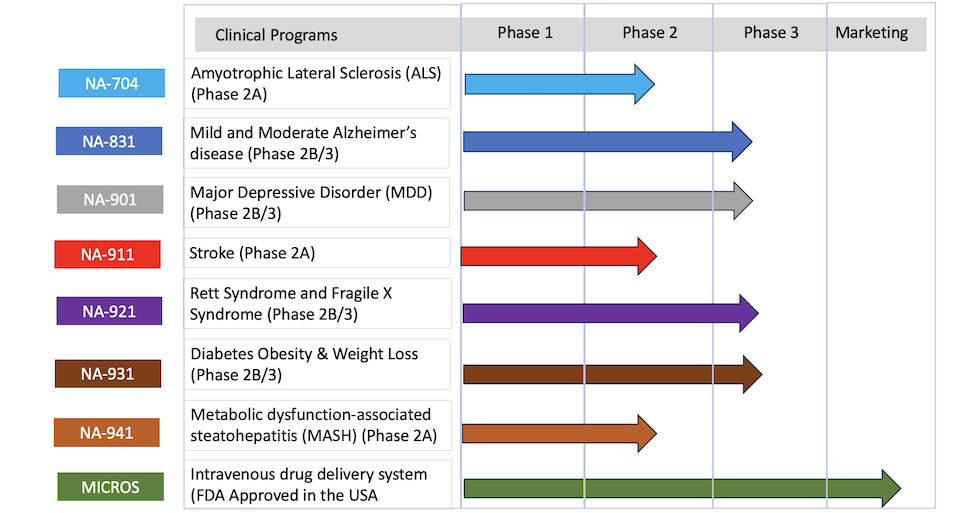
NA-921, also known as Bionetide™, is an investigational oral drug candidate being developed by Biomed Industries for the treatment of Rett syndrome. NA-921 has not been approved for marketing, and its safety and efficacy remain under investigation.
ABOUT BIOMED INDUSTRIES, INC.
Biomed Industries, Inc., headquartered in San Jose, California, is a biopharmaceutical company focused on discovering and developing treatments for serious diseases with significant unmet medical needs. Its development pipeline includes investigational therapies for Rett syndrome, Alzheimer’s disease, obesity, stroke, and other neurological and metabolic conditions.
For more information, visit www.biomedind.com.
Forward-Looking Statements
This release contains forward-looking statements regarding NA-921’s therapeutic potential and future clinical development. These statements involve risks and uncertainties, including clinical trial outcomes, regulatory requirements, financing, and development timelines. Results from earlier studies may not predict results in subsequent trials. Actual outcomes may differ materially from those expressed or implied.
Media Contact:
David Lee
Biomed Industries, Inc.
Visit us on social media:
LinkedIn
X
Biomed introduction video
Why it matters: The statistically significant results on both primary measures—without serious adverse events or treatment discontinuations—provide a strong signal that NA-921 could offer a well-tolerated option for a condition with few existing therapies. As the company moves into a larger Phase 3 trial, these data represent a crucial checkpoint for families and clinicians seeking treatments that address both symptom severity and quality of life.