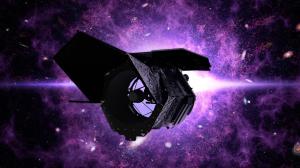
Detector systems from Teledyne aboard NASA’s flagship astrophysics mission are poised to support research into dark energy, exoplanets, and the Universe’s evolution

The successful August 30 launch of NASA’s Nancy Grace Roman Space Telescope from Kennedy Space Center in Florida on a SpaceX Falcon Heavy rocket marked a major milestone for Teledyne Space Imaging, a top provider of space-qualified imaging sensors, focal plane arrays, and integrated camera systems, part of Teledyne Technologies Incorporated (NYSE: TDY).
Following Roman’s launch, over 1,000 Teledyne scientific imaging sensors are now in orbit—counting those on Hubble and James Webb. Teledyne’s detector technologies serve both of Roman’s core instruments, facilitating research on dark energy, exoplanets, and numerous astrophysical phenomena. This accomplishment further cements Teledyne’s status as a premier provider of cutting-edge detector technologies for scientific, commercial, and government space endeavors.
Back in 2018, NASA granted Teledyne a $23 million (USD) contract to supply 24 flight-quality sensor chip assemblies for Roman, subsequently increased to 28. Every delivered detector exceeded performance targets for quantum efficiency, low noise, and image persistence, and also allowed for a 20% boost in the instrument’s spectral bandwidth.
For Roman’s Wide Field Instrument (WFI), Teledyne provided the H4RG-10 infrared detector arrays that compose the telescope’s distinctive focal plane—the biggest infrared focal plane ever launched. Each detector boasts over 16 million pixels in a 4096 × 4096 arrangement. A total of 18 H4RG-10 detectors form a mosaic exceeding 300 million pixels, featuring a unique silhouette that served as the basis for NASA’s chosen Roman mission logo.
Additionally, Teledyne delivered three CCD311-20 detectors for Roman’s Coronagraph Instrument, a cutting-edge high-contrast imaging system among the most advanced ever put into orbit. It uses precision coronagraph masks, deformable mirrors, wavefront sensing and control, and electron-multiplying CCD technology to block starlight and directly view much dimmer planetary systems. This demonstration should assist in paving the path for upcoming missions that can directly capture images of Earth-like planets orbiting nearby stars.
“Reaching more than 1,000 scientific, space-qualified imaging sensors in orbit is a proud achievement for everyone at Teledyne,” said Megan Tremer, President of Teledyne Space Imaging. “It reflects our long-standing commitment to advancing imaging technology and supporting the world’s most ambitious space missions. Roman is another important chapter in that story, and we are excited to see how it expands our understanding of the Universe.”
Roman represents NASA’s newest flagship astrophysics observatory, built to survey billions of galaxies and monitor distant stellar explosions to allow researchers to study dark energy—the enigmatic force behind the Universe’s accelerating expansion. The mission is also set to discover thousands of exoplanets beyond our solar system, including planetary systems never before examined at this scale. Its field of view is roughly 200 times greater than Hubble’s infrared capabilities.
In addition to its main goals, Roman will facilitate a wide array of astronomical investigations, ranging from star formation in nearby galaxies and supermassive black holes in the far-off Universe, to exploring the birth environments of stars and planetary systems. The observatory will also enhance our knowledge of objects inside our solar system.
The Roman mission draws from over 40 years of Teledyne advances in detector technology. Today, Teledyne’