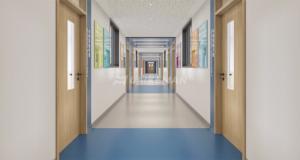
The next time you walk into a busy hospital or a crowded school, look down. The surface beneath your feet is quietly working as a first line of defense against moisture, noise, and daily wear—and a Chinese manufacturer is making a strong technical case for why that surface should be sheet vinyl rather than traditional tile.
BAODING, HEBEI, CHINA, October 25, 2026 /EINPresswire.com/ — A hospital corridor on a busy morning is a gauntlet of foot traffic, medical carts, and rolling equipment. By afternoon, maintenance crews are already applying disinfectants to those same floors in preparation for evening patients. Schools and office towers follow similar rhythms—constant use, regular cleaning, and a demand for materials that don’t buckle under pressure. The challenge for facility managers is finding a surface that balances durability with sanitation and safety. A practical vinyl flooring supplier offers flexible commercial sheets engineered for exactly these conditions, and resilient sheet vinyl has carved out a steady niche in high-use environments by meeting specifications for wear resistance, easy upkeep, fire ratings, and low emissions.
Infection control and moisture barriers take priority in healthcare settings
Healthcare design leans heavily on indoor environmental controls to minimize contamination risks. Hospital corridors, treatment rooms, and outpatient clinics need floors that block liquid penetration and hold up to continuous chemical scrubbing. Traditional modular tiles are vulnerable at their seams—join lines where moisture, cleaning agents, and organic matter can accumulate over time. Sheet PVC materials address this vulnerability through heat-welded installation, joining contiguous rolls into a single, smooth surface with no gaps for buildup.
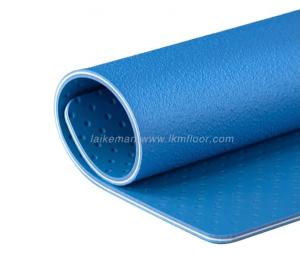
Laikeman (Xiong County Laikeman Plastic Products Co.,Ltd) produces heterogeneous resilient sheets aimed at high-sanitation environments. The standard 2 mm thick sheet, fitted with a 0.45 mm wear layer, forms a dense barrier against heavy wheeled equipment and rolling beds. These continuous 20-meter sheets are installed with heat-welded seams that restrict liquid pooling between subfloors and upper traffic zones. The moisture-resistant backing keeps the product stable under repeated washing. Since the material is a pure PVC matrix, it emits low levels of volatile organic compounds, which helps facilities hold the strict indoor air quality baselines required in patient care zones. The smooth surface layer also withstands standard hospital-grade disinfectants without clouding, pitting, or eroding the protective coating.
Ergonomic cushioning and acoustic control matter in schools
Educational buildings face their own set of physical demands. Classrooms, libraries, and administration corridors absorb constant foot traffic, dropped supplies, and shifting furniture. Hard concrete or terrazzo surfaces bounce impact noise down hallways, raising ambient sound levels and adding to fatigue for teachers and students who stand for long stretches. Resilient PVC floors offer structural flexibility, positioning themselves between hard ceramic tile and plush carpet.
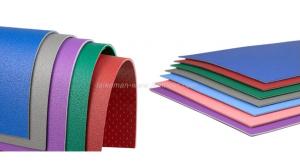
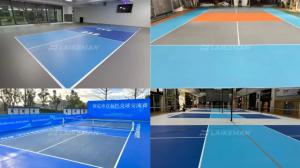
Laikeman supplies a range of wood-grain and stone-pattern heterogeneous sheets that upgrade classroom and library interiors while improving acoustics. The flexible sheet construction dampens footfall impact, keeping adjacent study areas quieter. A textured top layer provides wet slip resistance based on specific product specs, offering stable footing when rainy weather tracks moisture indoors. A custom vinyl flooring option lets school administrators align floor layouts with interior design guidelines without sacrificing protective performance. The soft backing cushions minor impacts from dropped supplies and supports heavy desk arrangements without leaving deep indentations.
Commercial projects look at lifecycle costs, not just upfront prices
Commercial real estate developers and facility managers evaluate floor coverings by lifecycle cost assessments rather than sticker prices. Office towers, retail centers, and government buildings know that high foot traffic strips light commercial coatings quickly, triggering frequent refinishing, temporary closures, and added labor expenses.
The commercial roll line from Xiong County Laikeman Plastic Products Co.,Ltd includes a 0.45 mm clear wear layer that holds up in high-traffic public walkways. These rolls come in standard 20-meter by 2-meter formats, reducing the number of installation seams across broad spaces. Fewer joints mean lower edge-peeling risks and fewer dirt traps where shoe residue collects. Laikeman materials meet B1 fire resistance standards, complying with commercial building safety regulations on flame spread and smoke density. The smooth outer layer resists dirt absorption, so facility teams can maintain surfaces with damp mopping and standard floor scrubbers instead of aggressive chemical strippers.
Manufacturing control verifies material performance before installation
Material stability in public construction starts with precise raw material processing and controlled factory conditions. Inconsistent sheet thickness or mixed raw material quality leads to uneven wear, delamination, and early replacement. Facilities teams and commercial buyers are increasingly demanding verified factory test reports before final installation.
Laikeman runs dedicated production bases with full internal manufacturing, from calendared film pressing to final backing application. Direct control over raw resin mixing and sheet rolling ensures consistent product thickness across production runs. Every batch of vinyl flooring undergoes physical property checks, including wear resistance validation, fire retarding evaluations, and VOC testing. Commercial buyers can request product samples and detailed batch inspection reports to verify that selected floor specifications align with engineering standards. This vertically integrated structure also allows flexible adaptation for custom vinyl flooring runs, giving project planners targeted options for specific commercial interiors.
Looking across commercial real estate, schools, and hospitals, modern resilient sheet materials demonstrate practical utility. Balanced wear characteristics, certified safety metrics, and straightforward maintenance protocols keep commercial vinyl sheets at the forefront of public facility design.
For more information regarding commercial sheet specifications and product samples, please visit the official site at https://lkmfloor.com/
Why it matters: As public institutions face tighter budgets and stricter safety regulations, the choice of flooring is no longer just an aesthetic decision—it’s a long-term operational one. Sheet vinyl’s combination of seam-free sanitation, acoustic dampening, and verified fire resistance gives facility managers a defensible option for reducing maintenance costs while meeting compliance standards, a consideration that will only grow as aging buildings undergo renovation.