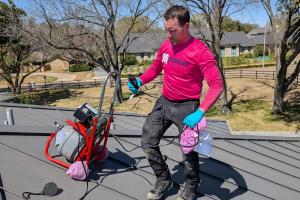
With a powerful El Niño projected to hit North Texas at the end of 2026, Fort Worth homeowners face a hidden threat that city infrastructure upgrades won’t solve: their own aging sewer pipes.

Local plumbers prepare for an autumn surge of wastewater backups and stormwater floods
FORT WORTH, TX, UNITED STATES, October 11, 2026 /EINPresswire.com/ — After months of extreme drought, Fort Worth is bracing for a dramatic weather shift that could bring significant rainfall to the region by late 2026.
Meteorological outlooks cited by the Fort Worth Report describe a “really strong” El Niño developing in November and December of 2026. The National Weather Service’s three-month forecast gives Fort Worth a 50% chance of receiving above-normal precipitation during that stretch.
That anticipated rain would be a welcome reprieve for parched lawns and farms, but Fort Worth plumbing and drainage experts are flagging a serious downside for homeowners.
“When heavy rain hits moisture-starved clay soil, problems arise,” explains Responsible Master Plumber Steven Smith (RMP-43457) of Fort Worth’s Mother Modern Plumbing. “The clay absorbs as much water as it can get, as fast as possible. It’s a bad drainage problem.”
The warning is not hypothetical. In early October, the region got a preview when five inches of rain fell in a single week. That downpour triggered multiple flood watches and warnings across Tarrant County, largely because the bone-dry soil couldn’t absorb or channel the water quickly enough.
Residents inundated the city with complaints about old storm drains and runoff points, but Smith points out that municipal sewer upgrades won’t touch the root cause for many households.
“Modernizing our city sewer system is great,” Smith explains. “But it doesn’t change the soil type. And it doesn’t fix the aging drainage pipes under individual homes.”
The majority of stormwater flood complaints came from neighborhoods hugging Loop 820. Homes on the west and southwest side of the loop tend to be newer constructions with modern sewer lines, while those to the north and east are far older.
“You’re looking at Carver Heights, Lake Worth, Central and West Meadowbrook,” Smith says. “These are 1950s and 60s builds with original cast iron sewer pipes. Waterlogged soil puts extreme pressure on older home drainage- the runoff issues here aren’t all infrastructure.”
The physics are unforgiving: as clay soil swells with moisture, it can exert up to 10,000 pounds per square foot (PSF) of pressure on buried sewer lines. Older cast iron and early-generation PVC pipes simply aren’t built to withstand that kind of force, which can lead to cracked pipes, wastewater backing up into homes, and sewage pooling in yards.
Smith advises homeowners to map where stormwater collects on their property. If flooding appears above the sewer line, near the foundation, or at the junction where the home line meets the city connection, the culprit is likely a damaged sewer pipe rather than an overwhelmed municipal drain.
“It happens every time we have a strong El Niño,” Smith comments. “Check for faint sewer odors in the yard or soft spots above the sewer line. Those are the first warning signs.”
Fort Worth officials have already wrapped up several flood control projects, including recent upgrades in Arlington Heights. Smith urges homeowners to take their own preventive steps and book sewer line cleaning and maintenance before the El Niño storms arrive.
Matthew Silkwood
Mother Modern Plumbing
+1 979-220-1702
Visit us on social media:
LinkedIn
Instagram
Facebook
YouTube
—
**Why it matters:** As climate patterns bring stronger El Niño events, the intersection of extreme weather and aging residential infrastructure will increasingly determine which neighborhoods flood and which stay dry. Homeowners who wait for city solutions may find the first line of defense is under their own yards.