The global construction sector is quietly undergoing a shift, and at the heart of it sits a surprisingly simple structure: the prefabricated container house. As project timelines tighten and the demand for flexible, relocatable spaces grows, these factory-built units are moving from niche solution to mainstream consideration. Suzhou Primehome Technology Co., Ltd., better known as PrimeHome, is examining this shift, detailing how manufacturing muscle and meticulous coordination are becoming the true drivers of success in modular construction.
The industry’s pivot toward modular methods is driven by a practical need to streamline efficiency and simplify logistics. In this landscape, prefabricated container houses have emerged as a key alternative to traditional, site-built structures. They are being deployed for temporary accommodation, commercial facilities, workforce housing, and even select residential projects. PrimeHome’s analysis focuses on how these structures are reshaping modular construction, positing that manufacturing capabilities, customization options, and project coordination are now critical factors for international buyers.
Unlike conventional buildings erected entirely on-site, prefabricated container houses are built from standardized components, prepared for transport and rapid installation. Depending on the design, core structural elements and even selected interior features can be completed before the units ever reach their final destination. This method significantly reduces on-site labor and allows project teams to sequence construction activities with greater precision.
This growing interest is also fueled by a need for adaptability. Infrastructure initiatives, tourism developments, remote worksites, and emergency housing programs often require usable space within strict timeframes. Prefabricated container houses offer a flexible answer to these challenges, though real-world schedules are still contingent on site prep, transportation logistics, local permitting, and utility hookups.
Prefabricated Container Houses Offer Flexible Applications
A core strength of these units is their ability to be configured for a wide range of uses. Individual containers can function as bedrooms, offices, staff quarters, or temporary facilities, while multiple units can be combined into larger modular complexes.
Interior planning is a major consideration for residential and hospitality projects. Buyers often require private sleeping areas, bathrooms, storage, and robust systems for ventilation, insulation, and electricity. Commercial uses might call for open floor plans, reception areas, meeting rooms, or dedicated workspaces. Modular design allows these specific needs to be addressed during the planning and manufacturing phases, rather than retrofitted later.
PrimeHome’s catalog reflects this versatility, featuring Prefabricated Container Houses, Modular Container Houses, Flat Pack Container Houses, Detachable Container Houses, Expandable Container Houses, and Foldable Container Houses. The company also offers Apple Cabins, Space Capsule Houses, Container Toilets, Customized Containers, and auxiliary materials, showcasing a range of approaches to space utilization, transport, and assembly.
For overseas buyers, choosing the right structure involves more than comparing dimensions or price tags. Factors like intended occupancy, local climate, transport limits, expected lifespan, maintenance needs, and local building codes all play a role in determining which design is fit for purpose.
Manufacturing Capacity Becomes a Key Project Consideration
As modular projects grow in complexity, a supplier’s manufacturing capability becomes a critical element of procurement strategy. Buyers must assess whether a manufacturer can maintain consistent quality, coordinate multiple units, and meet delivery schedules across various project stages.
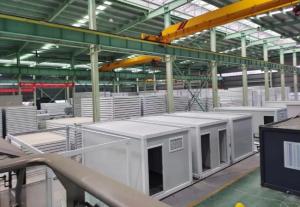
According to its company profile, PrimeHome operates a facility spanning nearly 28,000 square meters with a production capacity exceeding 5,000 container units per month. The company also reports an in-house research and development team of 11 professionals dedicated to custom design and product enhancement. These resources support projects requiring diverse layouts, specifications, and production volumes.
However, output volume is just one metric in supplier evaluation. International purchasers should also scrutinize material specs, structural design, quality inspections, finishing standards, packaging methods, and the availability of technical documentation. Transparent communication among the buyer, manufacturer, logistics provider, and installation crew is essential to flag potential issues before production commences.
A well-defined procurement process typically locks in the number of units, dimensions, interior layouts, utility needs, delivery destination, and acceptance criteria upfront. For large orders, confirming production timelines and quality-control procedures is vital, as delays or inconsistencies in a single unit can ripple across the entire project.
Project Experience Highlights the Importance of Coordination
Large-scale modular accommodation projects demonstrate that success is about more than just building individual structures. Design coordination, transportation planning, assembly guidance, and after-sales support all influence the final result.
PrimeHome’s company introduction highlights its role in supplying accommodation for the Qatar World Cup. The company reports delivering 6,000 fully furnished container houses for the event, which were used to house international fans in a Fan Village. Its responsibilities spanned initial design and precision manufacturing to logistics, on-site installation support, and technical guidance in Qatar.
This project underscores the operational demands of large modular programs. When thousands of units must be ready for a specific event or opening date, procurement teams must synchronize production capacity, shipping arrangements, site readiness, installation procedures, and quality checks.
Such experience is a relevant benchmark for buyers evaluating suppliers for workforce camps, temporary housing developments, tourism facilities, and other multi-unit projects. Still, every project has unique requirements, and past performance should be weighed against current technical specs, available resources, and the proposed implementation plan.
Customization and Local Requirements Shape Product Selection
While standardized designs simplify manufacturing, international projects rarely share identical needs. Climate, building regulations, site conditions, occupancy patterns, and transport infrastructure vary significantly between markets.
For instance, projects in hot climates demand careful planning for insulation, ventilation, shading, and cooling systems. Colder regions emphasize thermal performance, condensation control, and heating provisions. Coastal sites introduce considerations for corrosion resistance and material durability.
Customization should be addressed early in the purchasing process. Buyers can discuss room layouts, door and window positions, interior finishes, sanitary facilities, electrical configurations, and other project-specific features with the manufacturer. Any modifications must be reviewed for structural compatibility, production feasibility, transport constraints, and compliance with local regulations.
PrimeHome states it works with overseas partners across Europe, the Middle East, Southeast Asia, and the Americas, adapting container designs to different climates, rules, and market demands. For procurement teams, this highlights the need for clear technical communication and early confirmation of country-specific requirements.
Environmental factors are also part of the broader modular construction conversation. Controlled manufacturing and coordinated installation can help reduce certain types of on-site waste, depending on design and execution. However, the overall environmental footprint of a container house depends on material sourcing, transport distances, insulation, operational energy use, maintenance, and end-of-life management.
Evaluating Suppliers for Long-Term Project Value
As demand for adaptable construction solutions evolves, buyers must assess suppliers using a blend of technical, commercial, and operational criteria. A competitive quote should be evaluated against the full project scope, not just the unit price.
Key considerations include structural specifications, insulation performance, corrosion protection, interior fit-out, electrical and plumbing provisions, delivery terms, installation support, warranty conditions, and spare-parts availability. Buyers should also clarify which components are included in the quoted price and which require separate procurement or site installation.
For larger developments, sample inspections, drawings, material documentation, and agreed quality standards can establish a consistent basis for production approval. A detailed delivery plan helps clarify responsibilities among the manufacturer, freight provider, local contractor, and project owner.
PrimeHome’s product range and reported manufacturing experience position prefabricated container houses within a broader portfolio of modular accommodation solutions. By pairing appropriate product selection with careful technical planning and supplier evaluation, project teams can better determine if these structures meet their functional, logistical, and budgetary needs.
Looking Ahead: A More Adaptable Approach to Construction
Prefabricated container houses are helping to advance construction methods that prioritize manufacturing coordination, flexible layouts, and more predictable installation processes. Their suitability varies by application, but they offer a viable option for projects where adaptable space and coordinated delivery are key.
For manufacturers and international buyers alike, the next phase of modular construction will depend on balancing standardization with customization, production efficiency with quality assurance, and rapid deployment with local compliance. As project requirements continue to diversify, reliable manufacturing, transparent specifications, and coordinated technical support will remain central to successful outcomes.
PrimeHome continues to present its modular building products for residential, commercial, and accommodation applications, with options designed to address different project configurations and deployment needs.
Official Website: https://www.szprimehome.com/
Suzhou Primehome Technology Co., Ltd.
Suzhou Primehome Technology Co., Ltd.
+ +86 18550005262
steven.ma@szprimehome.com
Why it matters: The rise of prefabricated container houses signals a move toward more efficient, adaptable construction, but the key to success lies beyond the product itself. As this analysis shows, robust manufacturing capacity and seamless project coordination are what truly determine whether these modular solutions can meet the demands of large-scale, time-sensitive global projects. For buyers, the lesson is clear: the value is in the entire delivery ecosystem, not just the container.